What Are Aluminum Precision Parts and Their Key Applications?
Aluminum Precision Parts play a crucial role in various industries. These components are known for their strength, lightweight nature, and excellent corrosion resistance. They are crafted to meet specific tolerances, ensuring high-quality performance.
These parts are widely used in aerospace, automotive, and medical sectors. In aerospace, they contribute to lightweight structures that enhance fuel efficiency. In the automotive industry, they improve performance and reduce emissions. Medical devices often rely on Aluminum Precision Parts due to their reliability.
Despite their advantages, challenges exist. The manufacturing process can be complex. Achieving precise dimensions may require advanced technology and skilled labor. As industries evolve, the demand for innovation in Aluminum Precision Parts will grow. Companies must adapt to these changes to stay competitive. Understanding both the benefits and limitations is crucial.
Definition and Characteristics of Aluminum Precision Parts
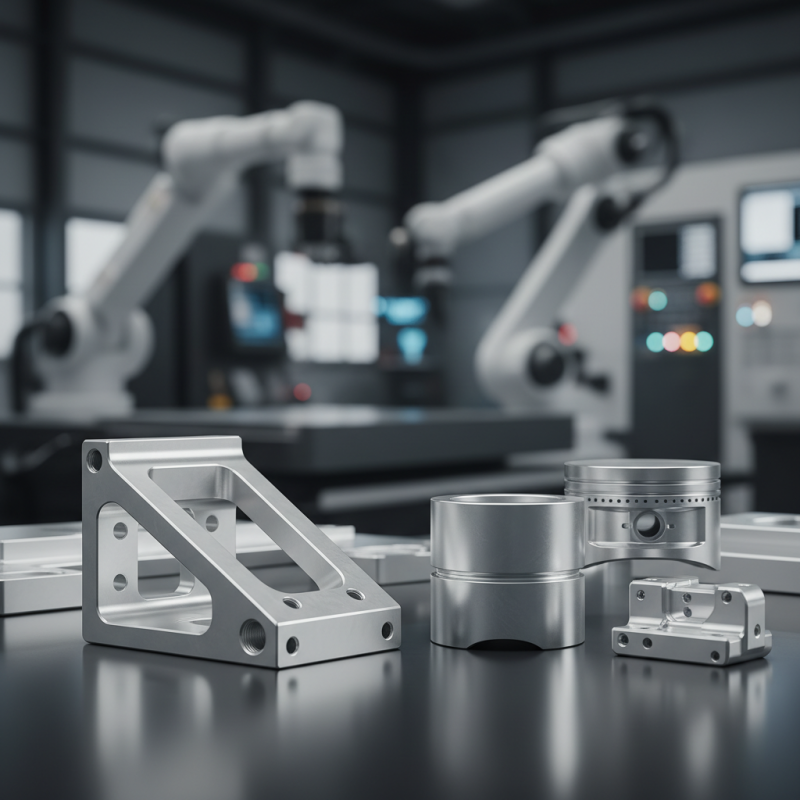
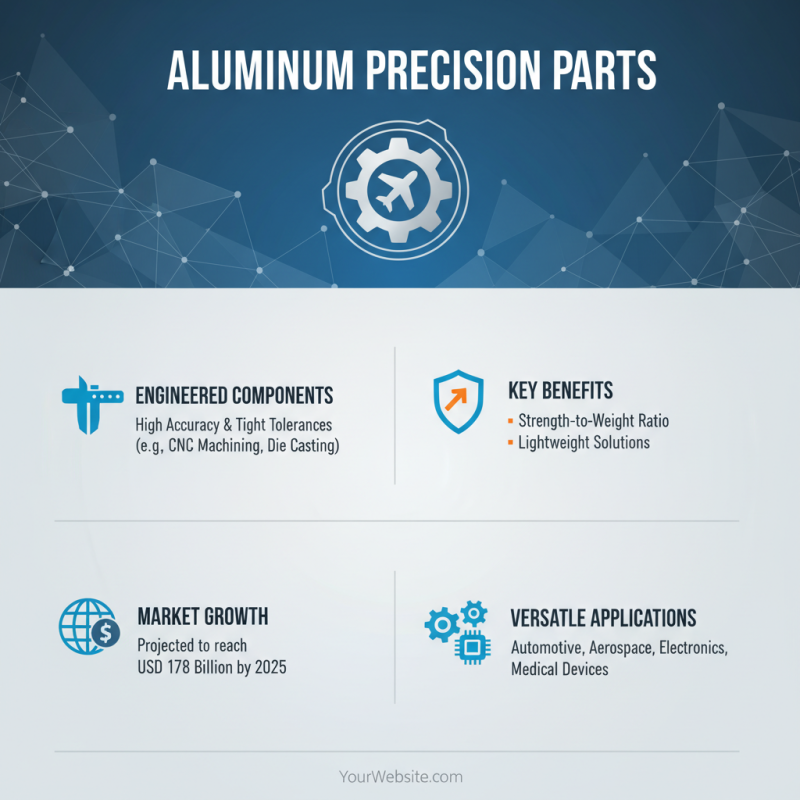
Aluminum precision parts are engineered components made from aluminum with high accuracy and tight tolerances. These parts are often produced through methods like CNC machining or die casting. They offer impressive strength-to-weight ratios, making them ideal for various applications. According to recent industry reports, the global aluminum parts market is projected to reach USD 178 billion by 2025, showcasing the growing demand for lightweight solutions in manufacturing.
These parts exhibit unique characteristics, such as excellent corrosion resistance and thermal conductivity. The lightweight nature of aluminum helps reduce energy consumption in several industries. For example, the aerospace sector has favored aluminum components due to their ability to enhance fuel efficiency. However, challenges remain. Some machining processes can be inefficient or lead to waste. This can affect overall cost-effectiveness and production speed. Addressing these inefficiencies is crucial as industries continue to seek sustainable practices.
In automotive manufacturing, aluminum precision parts play a critical role in improving vehicle performance. They help reduce overall weight while maintaining structural integrity. Yet, the increasing complexity of designs can introduce difficulties. Maintaining precision while meeting deadlines is a common struggle. Companies must invest in advanced technologies to overcome these hurdles. Balancing quality and production demands is essential for future growth in the aluminum precision parts market.
Manufacturing Processes for Aluminum Precision Parts
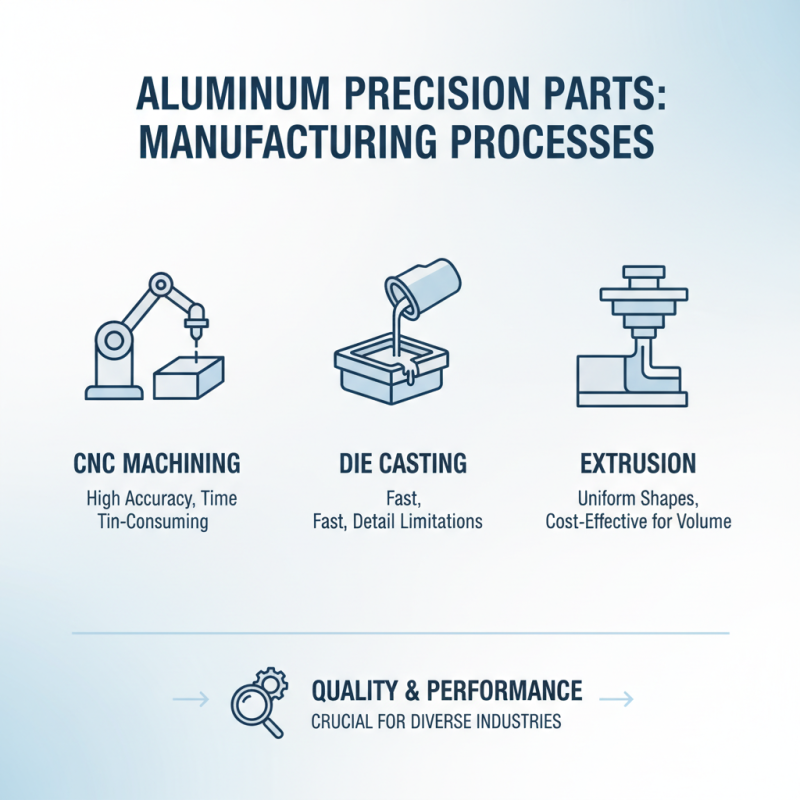
Aluminum precision parts are essential in various industries. The manufacturing processes for these parts play a crucial role in ensuring quality and performance. Techniques such as CNC machining, die casting, and extrusion are commonly used. Each method has its strengths and weaknesses. CNC machining offers great accuracy but can be time-consuming. Die casting is faster but may have limitations in detail.
Another important method is aluminum extrusion. This process allows for complex shapes and sizes. However, it can result in waste material. Achieving the right balance in manufacturing is challenging. Operators must constantly monitor equipment and materials to minimize defects. Learning from mistakes is vital for improvement. When operators rush, errors increase. Simplicity can be overlooked, leading to complications.
Quality control is a significant part of manufacturing. Inspecting parts after production ensures that they meet required standards. However, relying solely on inspection isn’t enough. Continuous feedback and adjustments are necessary throughout the manufacturing process. It’s a cycle of assessment and realignment that demands constant attention.
Key Industries Utilizing Aluminum Precision Parts
Aluminum precision parts are widely used across various industries. These parts offer
durability and lightweight properties
ideal for different applications. The aerospace industry is one of the biggest users of
aluminum precision parts. Aircraft components need to be strong yet light, making aluminum
a perfect fit.
The automotive industry also benefits greatly. Aluminum is used for engine parts, wheels,
and body panels. These parts improve fuel efficiency and reduce overall vehicle weight.
The medical sector utilizes aluminum precision parts in various devices. Sterilization and
strength make it a preferred material for surgical instruments.
Tip: Consider the application requirements before choosing aluminum parts.
Evaluate factors like strength, weight, and corrosion resistance.
In the electronics sector, aluminum housings and heat sinks are common. They help manage heat
effectively, ensuring devices operate efficiently. The challenge lies in precision machining,
where tolerances need to be tight.
Tip: Always check the tolerances required for your project. Inaccuracies can
lead to failures in assembly or performance.
Choosing aluminum precision parts can bring innovation to many industries. Yet, it’s crucial
to understand the limitations in certain conditions. Each design may require a unique approach.
Advantages of Using Aluminum for Precision Parts
Aluminum is increasingly favored for precision parts in various industries. Its lightweight nature significantly reduces the overall weight of components. This advantage is crucial in sectors like aerospace and automotive, where every gram counts. According to industry reports, precision aluminum parts can lower manufacturing costs by
30% to 40% compared to traditional materials.
Another key benefit is aluminum’s excellent corrosion resistance. This property extends the life of parts, leading to lower maintenance costs. In many cases, aluminum components perform better under stress than heavier materials.
However, challenges remain. The machining process can produce fine shavings, which may pose safety risks. Moreover, the thermal expansion of aluminum can affect tight tolerances in precision applications.
The recyclability of aluminum is also a significant advantage. Reports indicate that recycled aluminum requires
95% less energy than new aluminum production. This sustainable aspect is appealing in today’s environmentally conscious market. However, not all aluminum alloys are equally suited for precision machining. Some may lack the necessary strength or stability. Understanding the specific requirements of different applications is essential for success.
Future Trends in Aluminum Precision Parts Production and Applications
The aluminum precision parts industry is experiencing significant changes. According to a recent industry report, the global market for aluminum parts is expected to reach $120 billion by 2025. This growth is driven by the demand in automotive and aerospace sectors. Lightweight materials like aluminum are becoming essential for energy efficiency.
Future trends suggest a shift towards advanced manufacturing technologies. Additive manufacturing, or 3D printing, is gaining traction. It allows for complex geometries that traditional methods cannot achieve. Industry experts predict that 30% of aluminum parts will be produced using these techniques by 2030. However, not all applications will benefit equally. The learning curve can be steep, and some manufacturers struggle to adapt.
Sustainability is another important trend. More companies are focusing on recycling and resource efficiency. An estimated 75% of aluminum produced is still in use. This statistic highlights the importance of closed-loop systems. Yet, challenges remain. Not all facilities are equipped for eco-friendly practices. The transition is necessary, but companies must invest to keep pace.


 0086-15925850312

 CONTACT NUMBER