2026 Best Automotive Machined Parts for Enhanced Performance?
In the realm of automotive innovation, "Automotive Machined Parts" play a pivotal role. As technology advances, these components become vital for performance enhancement. Renowned expert Dr. Emily Carter notes, "Precision in automotive parts directly influences overall vehicle efficiency." This insight highlights the importance of quality machining.
When considering the 2026 market, manufacturers aim to blend durability with cutting-edge design. Each machined part must withstand rigorous demands and contribute to superior handling. Competition drives the need for speed and agility. Yet, achieving this balance is not without its challenges. Some products may compromise on cost, affecting long-term performance.
In a landscape filled with options, understanding the nuances of automotive machined parts is crucial. Quality does not solely stem from advanced technology; it requires ongoing evaluation and adaptation. As we explore the best options for 2026, we must ponder how each selection serves the greater goal: enhancing vehicle performance and safety. The journey is ongoing, and the quest for excellence demands reflection and innovation.
2026 Trends in Automotive Machined Parts and Performance Enhancements
The automotive industry is witnessing rapid changes in machined parts technology. In 2026, these trends significantly enhance vehicle performance. One important aspect is the shift towards lightweight materials. Engineers focus on aluminum and carbon composites. These materials reduce weight without sacrificing strength. This means better fuel efficiency and improved handling.
Another noticeable trend is the use of advanced manufacturing techniques. Additive manufacturing, or 3D printing, is becoming prevalent. This method allows for complex designs that traditional machining cannot achieve. It opens up new possibilities for part optimization. However, this trend also raises questions about durability and quality.
Additionally, customization is on the rise. Many drivers seek unique features for their vehicles. This demand pushes manufacturers to create tailored parts. While customization can lead to enhanced performance, it often complicates production processes. Balancing efficiency and creativity is a challenge for the industry.
2026 Best Automotive Machined Parts for Enhanced Performance
| Part Type |
Material |
Weight (kg) |
Performance Gain (%) |
Manufacturing Process |
| Engine Block |
Aluminum Alloy |
80 |
15 |
CNC Machining |
| Pistons |
Forged Aluminum |
0.5 |
20 |
Forging |
| Crankshaft |
Steel Alloy |
15 |
10 |
CNC Machining |
| Connecting Rods |
Titanium |
0.75 |
25 |
Casting |
| Flywheel |
Carbon Fiber |
5 |
18 |
Composite Layup |
| Turbocharger Housing |
Cast Iron |
3 |
12 |
Sand Casting |
Key Materials Used in High-Performance Machined Automotive Components
When it comes to high-performance automotive components, the choice of materials is crucial. According to industry reports, aluminum alloys stand out due to their lightweight nature and corrosion resistance. They can reduce overall vehicle weight by about 30%, enhancing fuel efficiency. This is critical as manufacturers strive to meet stricter emission regulations.
Steel alloys, particularly those treated for high strength, also play a vital role. These materials can withstand extreme conditions while providing durability and rigidity. The use of advanced steel can improve fatigue resistance by up to 20%, making it a reliable choice for critical components. However, sourcing the right steel is often a challenge. Variances in quality can lead to performance inconsistencies.
Composite materials are gaining traction as well. Carbon fiber and reinforced plastics offer an excellent strength-to-weight ratio. These materials can increase component performance but come with higher production costs. The complexity of manufacturing composite parts can also lead to quality control issues. As the automotive sector evolves, the balance between performance, cost, and material integrity remains a key concern for engineers and manufacturers alike.
Impact of Precision Engineering on Vehicle Efficiency and Longevity
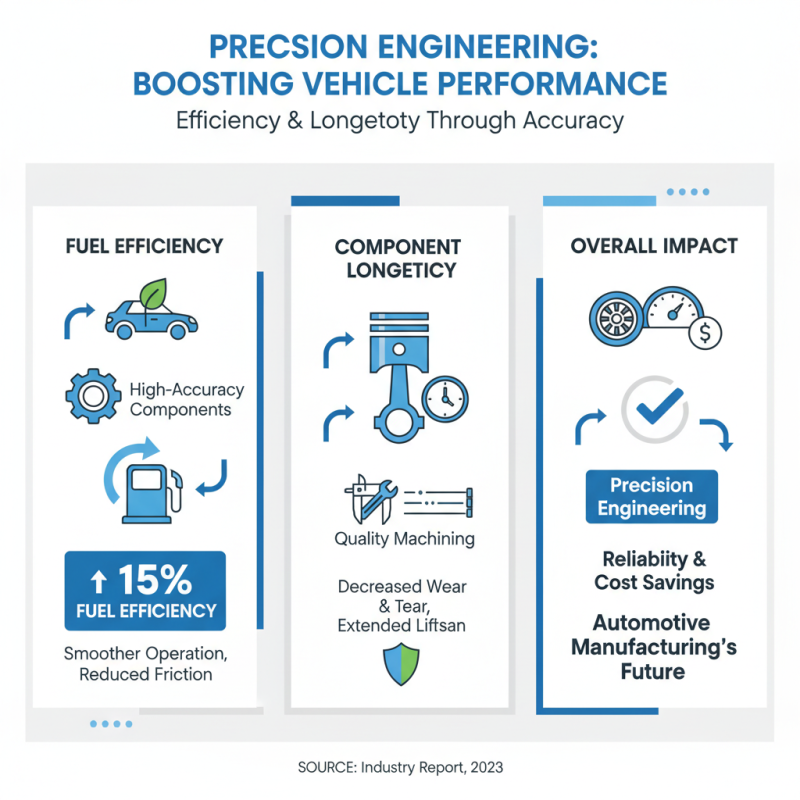
Precision engineering plays a crucial role in enhancing vehicle efficiency and longevity. It involves designing components with high accuracy, which directly impacts how smoothly a vehicle operates. According to a recent industry report, vehicles utilizing precision-engineered parts can show a 15% increase in fuel efficiency. This data reflects the importance of high-quality machining techniques in automotive manufacturing.
Moreover, precision parts significantly reduce wear and tear. A study indicated that vehicles using such components can extend their lifespan by up to 30%. This statistic underscores the potential for manufacturers to create more durable vehicles. However, not all automotive companies prioritize these techniques. Some might cut costs, compromising quality for short-term gains. This approach often leads to higher long-term expenses for consumers.
The impact of precision engineering extends beyond efficiency. Quality machined parts contribute to better handling and safety as well. Observing a market trend, more vehicle owners prioritize reliability over price. They prefer investing in components that last. However, there's a need for more awareness about precision manufacturing's benefits. Not every consumer understands its long-term advantages. This gap can lead to misinformed purchasing decisions.
Top Vendors and Innovations in Automotive Machined Parts for 2026
As the automotive industry evolves, the demand for high-performance machined parts increases. According to a recent industry report, automotive machining is projected to grow annually by 5.8% from 2024 to 2029. Innovations in materials and design are at the forefront of this growth. The use of lightweight alloys and advanced composites is gaining traction. These innovative materials enhance vehicle efficiency and reduce overall weight.
Emerging vendors are introducing cutting-edge technologies. Additive manufacturing, or 3D printing, is transforming the production of machined parts. This method allows for complex geometries that traditional machining cannot achieve. Industry experts suggest that by 2026, approximately 30% of machined parts may utilize 3D printing methods. However, this transition is not without challenges. Quality control and material consistency remain critical concerns. Many companies are still trying to perfect these processes.
Investments in automation and AI will continue to shape this sector. Automated machining processes can improve precision and reduce lead times. Data analytics is also being integrated to predict part failures before they occur. Yet, the integration of these technologies can be overwhelming for smaller vendors. Adapting to rapid changes is essential, but it comes with significant hurdles. The journey towards enhanced automotive performance is complex and requires ongoing refinement.
Future Outlook: Sustainability in Machined Parts for the Automotive Industry
Sustainability in the automotive industry is becoming a crucial focus. Recent studies indicate that nearly 70% of automotive manufacturers are prioritizing eco-friendly materials. This reflects a shift towards reducing carbon footprints in production. Lightweight, recycled materials are gaining popularity for their ability to enhance performance while minimizing environmental impact.
Machined parts play a significant role in this transition. They often utilize materials like aluminum and composite plastics that can be sourced sustainably. Reports suggest that the use of recycled aluminum can reduce energy consumption by up to 95%. However, challenges remain. Not all manufacturers are on board with sustainable practices, and some resist the change due to cost concerns.
Furthermore, advancements in technology are vital. Innovations in additive manufacturing and precision machining offer new avenues for sustainability. These methods can decrease waste and optimize material usage. Yet, the industry must find a balance between innovation, cost, and sustainability, as some practices may not be fully scalable. The future could be bright, but it requires collective effort to embrace change fully.
2026 Best Automotive Machined Parts for Enhanced Performance
This chart illustrates the projected performance enhancements of various machined parts used in the automotive industry by 2026. The data reflects the percentage improvement in efficiency, weight reduction, and overall performance across selected component types, emphasizing the trend towards sustainability and innovation.


 0086-15925850312

 CONTACT NUMBER