Best Casting Components for Global Buyers in 2026?
As we look towards 2026, the demand for high-quality casting components continues to rise globally. Manufacturers and consumers alike seek reliable products that stand the test of time. This article explores the best casting components that are expected to dominate the market.
Casting components play a crucial role across various industries, from automotive to aerospace. Choosing the right materials and designs can significantly impact performance and sustainability. Factors such as durability and cost-effectiveness will guide global buyers in their decisions.
However, navigating the casting component market isn't always straightforward. Inconsistencies in quality can lead to significant setbacks. Buyers must critically assess suppliers, ensuring they provide trusted and tested products. Understanding emerging trends will be essential for making informed choices in this evolving landscape.
Best Casting Materials for Diverse Applications in 2026
In 2026, the choice of casting materials will significantly influence various industries. Common materials such as aluminum and steel are reliable for many applications. However, the growing demand for lightweight components may drive the popularity of magnesium alloys. These materials can offer strength while reducing overall weight.
Innovative composite materials are also making waves. They provide flexibility and durability that surpass traditional metals in some instances. For example, carbon fiber-reinforced polymers are increasingly used in automotive and aerospace sectors. They offer excellent corrosion resistance and can withstand high temperatures. However, these materials can be costly and require specialized processing techniques.
As industries evolve, the need for sustainable materials becomes crucial. Recycling metals can significantly reduce environmental impact, but challenges remain. Ensuring quality and performance in recycled products is a constant concern. Nonetheless, the trend towards eco-friendly casting materials is gaining traction among global buyers. Overall, the landscape of casting materials in 2026 promises both innovation and challenges.
Best Casting Components for Global Buyers in 2026
Impact of Industry 4.0 on Casting Component Innovations
The advent of Industry 4.0 is reshaping the landscape of casting components significantly. Advanced technologies, including AI and IoT, are enhancing production efficiency. According to a report by McKinsey, companies adopting these innovations could see productivity boosts of up to 30% by 2026. This shift allows for smarter monitoring of production processes, leading to higher quality components.
Automation and smart manufacturing systems enable real-time data analysis. With predictive maintenance, downtime can be minimized, improving operational reliability. For instance, a recent industry study highlighted that predictive maintenance could reduce maintenance costs by 15%. However, implementing these technologies poses challenges. Companies must invest in training and development, which can be resource-intensive and complex.
Innovations in materials are also emerging. Engineers are experimenting with lightweight alloys and composites. These materials can enhance performance while reducing environmental impact. Despite these advancements, the industry must ensure consistent quality, as variability remains a concern. Many firms still lack standardized processes to fully leverage these new materials. Addressing these issues will be crucial for success in the rapidly evolving casting components market.
Comparative Analysis of Casting Techniques by Market Demand
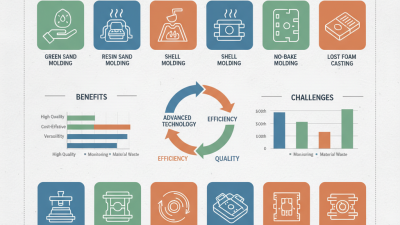
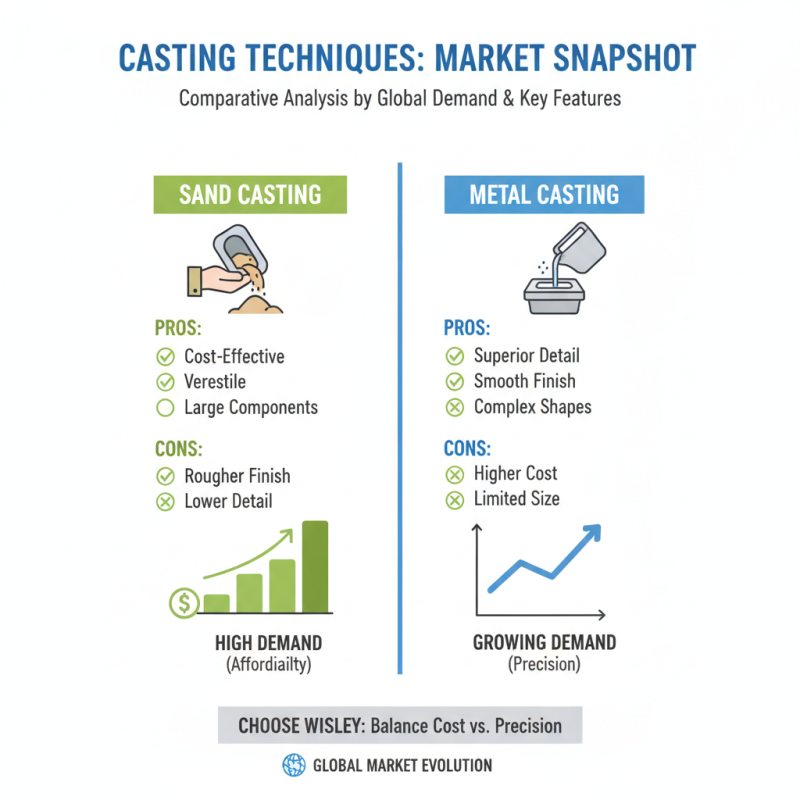
As global demand for casting components evolves, various techniques emerge as leaders in the market. Each technique has its strengths and weaknesses. For instance, sand casting remains popular for its cost-effectiveness and versatility. Metal casting, on the other hand, offers superior detail but may incur higher production costs. Understanding these nuances can help buyers make informed choices.
When evaluating casting techniques, consider production speed and material properties. Some methods may excel in precision, while others prioritize strength or flexibility. The landscape is not static; new technologies, such as 3D printing, are reshaping the industry. These innovations present both opportunities and challenges. Buyers must stay aware of these shifts to harness their benefits effectively.
Market trends indicate a growing preference for sustainable practices. Techniques that minimize waste are increasingly favored. However, not all buyers prioritize sustainability in the same way. Understanding individual market demands becomes crucial for suppliers. Each buyer has unique needs to address, leading to diverse expectations in casting processes. This complexity requires careful analysis and adaptation by all involved.
Forecasting Global Market Growth for Casting Components in 2026
As we look towards 2026, the global market for casting components is anticipated to experience significant growth. With advancements in technology and manufacturing processes, casting components are becoming increasingly vital across industries. The automotive sector, in particular, will likely drive demand due to the rise of electric vehicles and lightweight materials.
Tips: Focus on quality over quantity. Identify reliable suppliers that prioritize meticulous quality control. This ensures your components meet industry standards.
Adapting to market trends is crucial. Companies should invest in sustainable practices to attract environmentally conscious buyers. However, many manufacturers struggle to balance innovation with sustainable operations. Reflecting on past failures can enhance future strategies for growth.
Tips: Regularly review supplier performance. This evaluation can reveal areas for improvement and foster stronger collaborations, increasing overall productivity. Navigating the dynamic global landscape will require adaptability and foresight in meeting customer demands for casting components.
Best Casting Components for Global Buyers in 2026? - Forecasting Global Market Growth for Casting Components in 2026
| Region |
Market Size (USD Million) |
Growth Rate (CAGR %) |
Key Application Areas |
| North America |
1,200 |
5.2 |
Automotive, Aerospace |
| Europe |
1,000 |
4.8 |
Construction, Machinery |
| Asia-Pacific |
1,800 |
6.5 |
Electronics, Energy |
| Latin America |
450 |
3.0 |
Consumer Goods, Agriculture |
| Middle East & Africa |
350 |
2.5 |
Industrial Equipment, Petrochemical |


 0086-15925850312

 CONTACT NUMBER