Why Choose Die Casting Components for Your Manufacturing Needs?
In today's competitive manufacturing landscape, choosing the right components is crucial. Die Casting Components stand out due to their unique benefits. They offer precision and durability, which many manufacturers seek. The process allows for complex shapes and fine details, reducing the need for extensive machining later.
Manufacturers often face challenges in balancing quality and cost. Die casting addresses this. With its efficiency, it minimizes waste and maximizes productivity. Yet, companies must consider factors like material selection and design intricacies. This requires reflection on their specific needs and goals.
Ultimately, the choice of Die Casting Components can significantly impact production outcomes. Each project is unique, demanding careful consideration. Manufacturers must weigh the advantages against potential limitations. This decision shapes not just immediate results but long-term success in the industry.
The Fundamentals of Die Casting: A Brief Overview of the Process
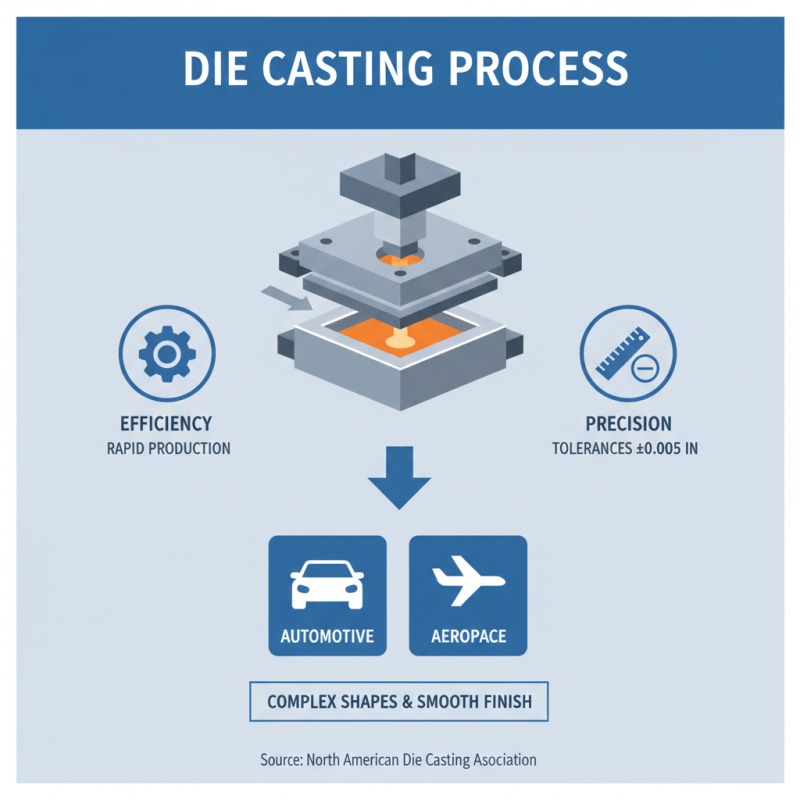
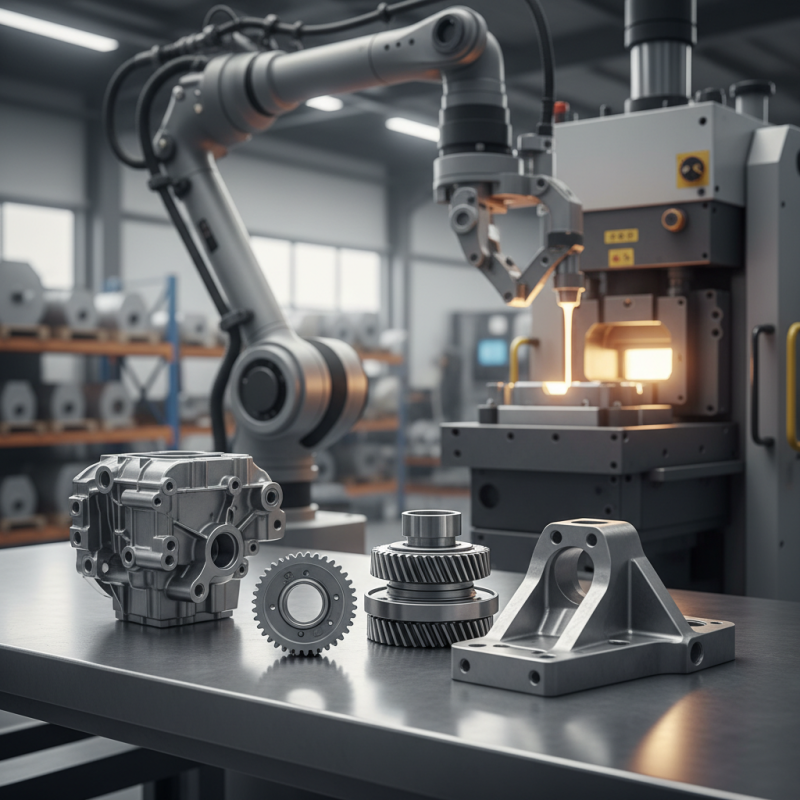
Die casting is a widely utilized manufacturing process, known for its efficiency and precision. In essence, it involves injecting molten metal into a mold under high pressure. This method can create complex shapes with a smooth finish. According to the North American Die Casting Association, die casting can produce parts with tolerances as tight as ± 0.005 inches. This precision makes it a popular choice in the automotive and aerospace industries.
The process begins with the creation of a mold, typically made from steel or iron. The metal, often aluminum or zinc, is heated until it melts and is then injected into the mold cavity. Cooling occurs quickly, allowing for rapid production. The cycle time can be as short as 20 to 30 seconds for small parts, contributing to high productivity levels. However, the initial cost of creating molds can be significant and may deter smaller operations.
Despite its advantages, die casting does have drawbacks. The process is not suitable for all materials. It often requires additional machining for intricate details. According to a recent industry report, approximately 15% of die-cast components may need secondary operations, which can increase costs and lead times. Manufacturers need to weigh these factors carefully when considering die casting.
Key Benefits of Die Casting Components in Manufacturing Industries
Die casting components offer numerous advantages for various manufacturing industries. One significant benefit is high precision. This process allows for intricate designs with tight tolerances. As a result, manufacturers can create complex shapes that fit perfectly in assemblies. The reduced need for additional machining saves time and money.
Another critical advantage is material efficiency. Die casting uses molten metal, which fills the mold entirely. This method minimizes waste and maximizes resource utilization. It also supports the use of recyclable materials, contributing to sustainability. Many manufacturers report lower material costs over time.
However, challenges exist in die casting. Not every component is suitable for this process. Complex geometries can pose difficulties. Ensuring quality requires careful monitoring. Manufacturers must strike a balance between speed and precision. Evaluation of design options helps in achieving optimal outcomes. The commitment to quality makes the investment worthwhile.
Why Choose Die Casting Components for Your Manufacturing Needs? - Key Benefits of Die Casting Components in Manufacturing Industries
| Benefit |
Description |
Applications |
| High Precision |
Die casting delivers exceptionally precise dimensions and tolerances. |
Automotive, Electronics |
| Reduced Material Waste |
Minimal excess material is produced, making it a cost-effective choice. |
Consumer Products, Machinery |
| Complex Geometries |
Able to create intricate shapes and designs that are difficult to achieve with other methods. |
Aerospace, Medical Devices |
| High Production Rates |
Fast production cycles lead to increased manufacturing efficiency. |
Electronics, Appliances |
| Superior Surface Finish |
Die-cast components have excellent surface quality that often requires little to no finishing. |
Home Fixtures, Automotive Parts |
Comparative Analysis: Die Casting vs. Alternative Manufacturing Methods
Die casting is an efficient method to produce complex metal components. It involves forcing molten metal into a mold. This process allows for high precision and surface finish. Compared to traditional machining methods, die casting significantly reduces material waste. Yet, it’s not without challenges. The initial tooling costs can be high, which might deter small-scale manufacturers.
In contrast, alternative methods like CNC machining offer versatility. CNC machining can create custom parts from various materials. However, it often results in more waste. The precision of CNC is impressive, but it typically takes longer to produce parts. Also, surface finish may require additional finishing processes.
Die casting shines in high-volume production. When demand for parts rises, it becomes cost-effective. Conversely, for low-volume needs, it might not be ideal. Evaluating your production scale is essential. Every approach has its trade-offs. Understanding these can guide better manufacturing decisions.
Industry Applications: Where Die Casting Shines in Production
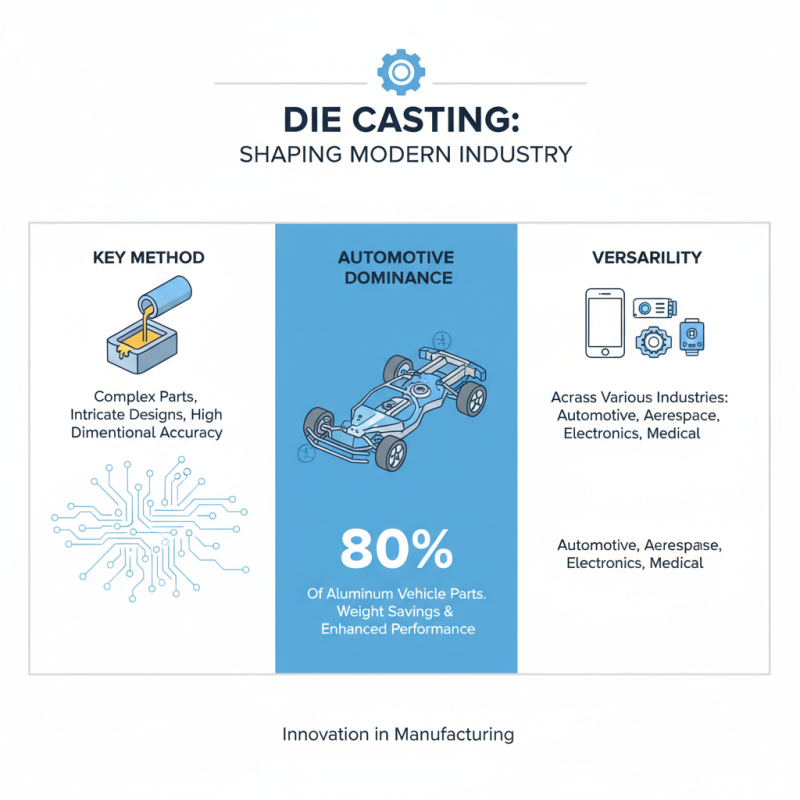
Die casting has become a key method in various industries for producing complex parts. Its ability to create intricate designs with high dimensional accuracy is a game-changer. In the automotive sector, for example, die casting components account for about 80% of aluminum vehicle parts. This method allows manufacturers to save weight while enhancing performance.
In electronics, die cast components are crucial for heat sinks and enclosures. Studies show that over 60% of electronic devices utilize die casting for their housings. This ensures durability and thermal management. Aerospace applications also benefit, where lightweight components improve fuel efficiency and performance.
Tips: Always consider the material. Aluminum and zinc alloys are popular for their excellent strength-to-weight ratio. Also, evaluate the production volume. Die casting is most cost-effective for large runs. Finally, inspect prototypes thoroughly. Small defects can lead to significant issues in mass production.
Market Trends: Growth of Die Casting in Global Manufacturing Sector
The die casting market is experiencing significant growth. According to a recent report by MarketsandMarkets, the global die casting market is projected to reach $85.04 billion by 2026, growing at a CAGR of 8.2%. This rise is attributed to the increasing demand for lightweight yet durable components in industries such as automotive, aerospace, and electronics.
As the industry evolves, manufacturers are focusing on sustainable practices. A shift towards recycling and reduced waste is becoming commonplace. Many companies are investing in advanced technologies to enhance efficiency. For example, 3D printing and improved machinery are creating new opportunities within die casting processes. This push toward innovation effectively meets today’s environmental standards.
Tips: Consider the material selection carefully. Aluminum is lightweight and corrosion-resistant. However, magnesium offers even greater weight savings. Assess your product needs before deciding. Monitor industry trends consistently. Keeping up with technological advancements can help maintain a competitive edge. Embracing change is vital, but it can be challenging to adapt.
While growth is evident, some aspects require reflection. Not every business has the resources to invest in technological upgrades. Smaller enterprises may struggle to compete with larger firms. Balancing investment in new technologies with operational costs is crucial. The market's fast pace means that hesitation can lead to lost opportunities.
Growth of Die Casting in Global Manufacturing Sector


 0086-15925850312

 CONTACT NUMBER