How to Choose the Best Die Casting Aluminum Parts for Your Project?
Selecting the right Die Casting Aluminum Parts is crucial for your project's success. According to the Aluminum Association, the use of aluminum in die casting has increased by 25% in the last decade. This growth showcases the material’s versatility and strength, making it popular across various industries.
Experts emphasize the importance of choosing quality components. John Smith, a renowned engineer in aluminum casting, states, “Choosing the right parts can make or break your project.” This highlights the need for careful consideration in your selection process.
When assessing Die Casting Aluminum Parts, consider factors like material quality, manufacturing techniques, and supplier reliability. Each decision affects performance and longevity. It’s easy to overlook small details, but these can lead to significant issues. Aim for a balance between cost and quality, and reflect on how each component fits into your overall design.
Factors to Consider When Selecting Die Casting Aluminum Parts
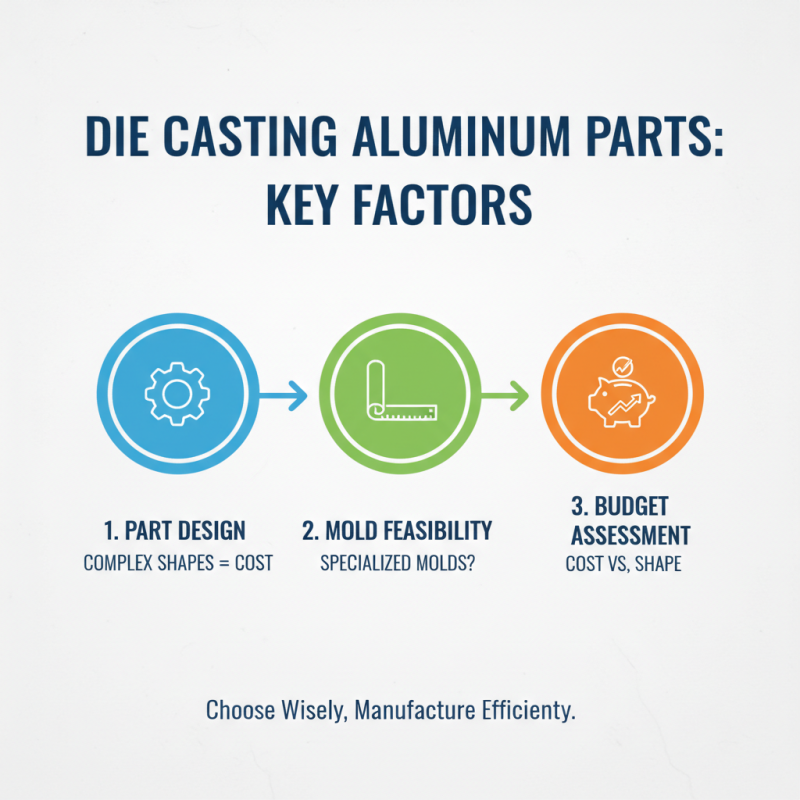
When selecting die casting aluminum parts, several factors play a crucial role. The first is the part's design. Complex shapes may require specialized molds. This can increase manufacturing costs. It’s essential to assess whether the desired shape is feasible within your budget.
Another important factor is the aluminum alloy used. Different alloys have varying strength and weight characteristics. Some might resist corrosion better than others. Make sure you understand the environment in which your parts will operate. This will help in choosing the right alloy.
Tips: Always request samples before committing. This allows for a thorough evaluation. Also, consult with manufacturers about their production capabilities. Their experience can guide you in making informed choices. Don't overlook the importance of lead times. Sometimes, quicker isn't always better. Patience may lead to higher quality results.
Understanding the Types of Aluminum Alloys for Die Casting
When choosing aluminum alloys for die casting, it’s crucial to understand the characteristics of different types. Aluminum alloys are categorized mainly into two families: wrought and cast. Within cast alloys, the A356 and A380 alloys are popular choices. A356 offers excellent corrosion resistance and good mechanical properties, making it ideal for automotive applications. Meanwhile, A380 is known for its fluidity, which allows for intricate designs and detailed features.
Data from industry reports indicate that about 70% of die casting applications utilize aluminum alloys. A356 alloy, specifically, has a tensile strength of around 240 MPa, while A380 boasts a maximum tensile strength of 290 MPa. These specifications can greatly influence the choice based on desired performance and environmental factors.
However, selecting the right alloy is not always straightforward. Factors like manufacturing cost and alloy availability need careful consideration. Not all suppliers offer the same quality, and this inconsistency can affect project outcomes. Additionally, different applications require distinct tolerances and finishes, which may not align with the properties of every alloy. Reflecting on these aspects can lead to better decision-making in your project.
How to Choose the Best Die Casting Aluminum Parts for Your Project?
| Aluminum Alloy |
Typical Applications |
Mechanical Properties |
Corrosion Resistance |
Casting Characteristics |
| A380 |
Automotive, Electrical Housings |
Tensile Strength: 310 MPa |
Good |
Excellent fluidity; low shrinkage |
| A383 |
Consumer Products, Marine |
Tensile Strength: 290 MPa |
Moderate |
Excellent casting properties; good adhesion |
| A356 |
Aerospace, Structural Components |
Tensile Strength: 310 MPa |
Very Good |
Good fluidity and low porosity |
| A535 |
Industrial Components, Pumps |
Tensile Strength: 300 MPa |
Excellent |
Good for intricate designs and shapes |
| A413 |
High Performance Engines |
Tensile Strength: 250 MPa |
Good |
Excellent surface finish; good fluidity |
Evaluating Dimensional Tolerances and Surface Finishes
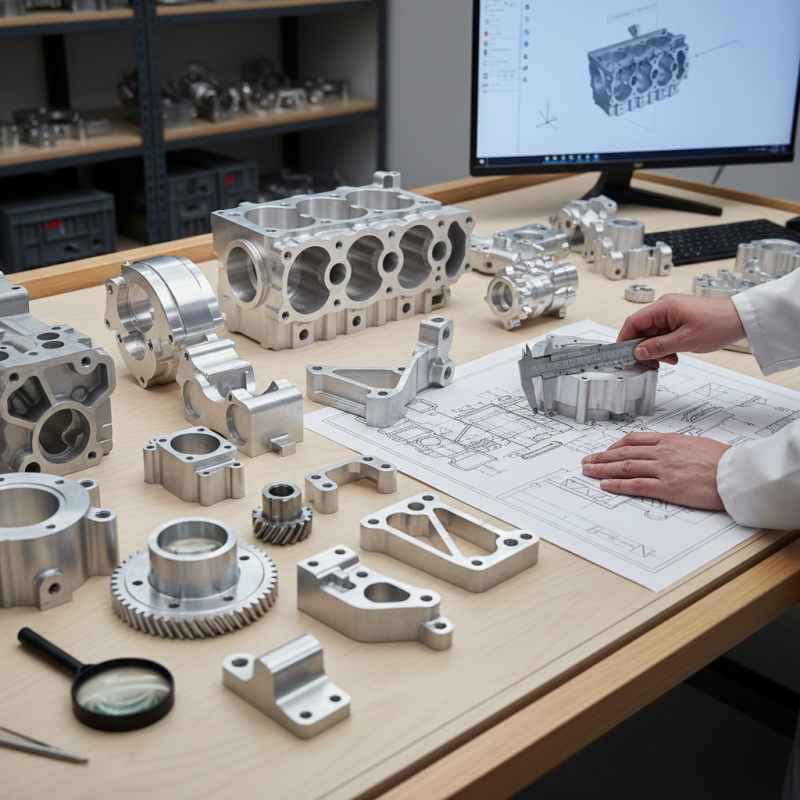
When choosing die casting aluminum parts, evaluating dimensional tolerances and surface finishes is critical. Dimensional tolerances can significantly impact the functionality of your project. Reports show that a tolerance range of ±0.002 inches is often considered standard for aluminum die castings. However, achieving tighter tolerances can be challenging and may increase production costs. Knowing the specific requirements of your project helps in making informed decisions.
Surface finishes are equally important. A smooth finish can enhance the aesthetic appeal of parts, but it also affects performance. Data indicates that a surface roughness of Ra 1.6 to 3.2 micrometers is achievable with standard processes. Yet, achieving a finer finish might require additional machining or treatments, which complicates the manufacturing timeline. Each process decision should involve careful consideration of the balance between aesthetics and functionality.
Quality control is another aspect to reflect on. Not all manufacturers adhere to the same standards. Sometimes, parts may not meet specified tolerances or finishes, leading to performance issues down the line. It's essential to establish clear communication with manufacturers. Overlooking the importance of testing and inspection could lead to costly revisions. Adopting strict quality benchmarks can prevent these pitfalls in the design stage.
The Role of Cost and Production Volume in Your Decision
When selecting die casting aluminum parts for your project, cost and production volume are crucial factors. The price you pay directly impacts your budget. Higher quality materials often cost more, but they can improve durability. If your project demands more parts, a lower cost per unit becomes essential. On the flip side, producing a low volume can drive up costs significantly.
Tips:
- Always request multiple quotes. Comparing prices helps uncover potential savings.
- Evaluate your production needs realistically. Knowing the volume required can prevent over-ordering.
Production volume can also affect manufacturing processes. High volumes might allow for more efficient methods, lowering per-unit costs. However, rushing can introduce errors. Each miscalculation can lead to wasted materials and time. Reflecting on your project timeline is essential. Creating a balance between speed and accuracy is paramount.
Tips:
- Monitor quality control closely. Small issues can escalate in large batches.
- Prioritize your specifications. Know what you can compromise without sacrificing quality.
Selecting a Reliable Supplier for Die Casting Aluminum Parts
When selecting a supplier for die casting aluminum parts, reliability is crucial. Research indicates that over 70% of manufacturing disruptions stem from supplier issues. Choosing the wrong supplier can delay your project significantly. Aim for suppliers with proven track records and robust quality control measures.
Evaluate their production capabilities. A reliable supplier should handle various part sizes and complexities. According to industry reports, suppliers with flexible production techniques can reduce lead times by 30%. This is vital for meeting tight deadlines. Also, be aware of their material sourcing practices. High-quality aluminum and efficient processes lead to better end products.
Engage in regular communication with potential suppliers. Ask for samples before finalizing your choice. Testing their products helps identify any potential issues early on. Some suppliers may have outdated methods, affecting quality. Investigating their technology can reveal gaps in their capabilities. It's essential to prioritize long-term relationships with suppliers who are willing to adapt and grow with your needs.
Comparison of Factors in Choosing Die Casting Aluminum Parts


 0086-15925850312

 CONTACT NUMBER