Leave Your Message

Top 10 Tips for Choosing Quality Cast Metal Parts?

Choosing quality cast metal parts is crucial for any project. These components can greatly impact performance and durability. High-quality cast metal parts ensure better functionality in machinery and products.

However, selecting the right parts can be challenging. The market offers a wide range of options, which can overwhelm buyers. Factors like material type, casting process, and supplier reputation are essential to consider. A poor choice might lead to failures or costly repairs later on.

It's easy to overlook important details. Many assume all cast metal parts are the same. In reality, subtle differences can significantly affect your project’s success. Don’t underestimate this decision. Understanding the nuances can make or break your final product.
Top 10 Tips for Choosing Quality Cast Metal Parts?

Understanding the Importance of Quality in Cast Metal Parts

Top 10 Tips for Choosing Quality Cast Metal Parts?

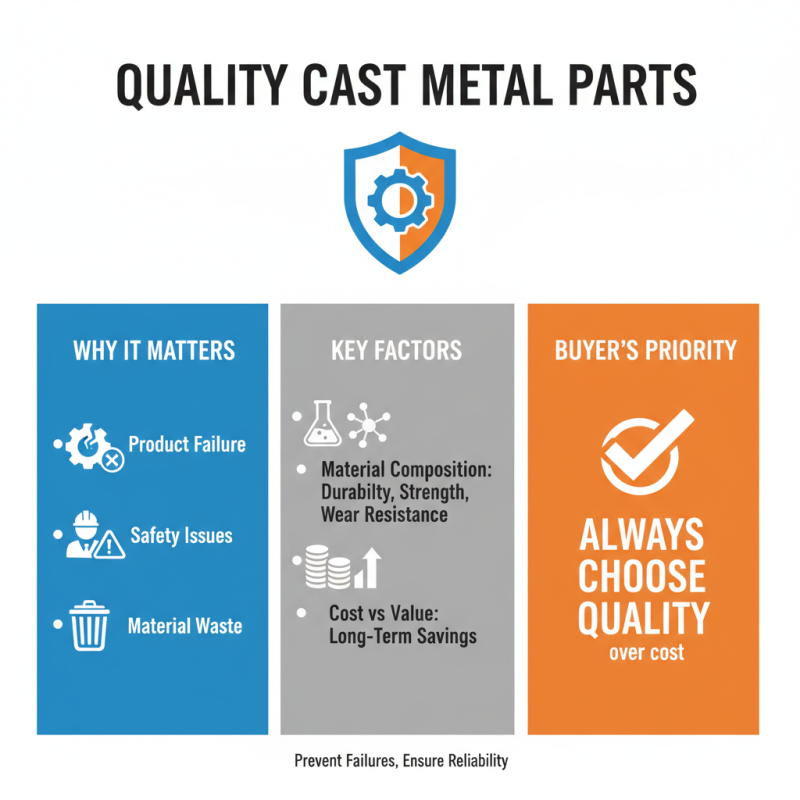
Quality in cast metal parts is crucial for various industries. Poor quality can lead to product failure, safety issues, and waste. Understanding the materials used in casting is vital. Metal composition affects durability, strength, and resistance to wear. Buyers should always prioritize quality over cost. Sometimes, cheaper options may seem tempting, but they often lead to greater expenses later.

Inspecting the manufacturing process is essential. Quality control checks during casting should not be overlooked. Look for suppliers that have rigorous testing standards. Transparency in their production methods can indicate reliability. It's important to ask questions about their practices. Not all suppliers will offer detailed information. This can be a red flag.

Ultimately, the selection of cast metal parts impacts overall project success. Each component plays a role in the final product's performance. Investing in quality now prevents future complications. Remember, it's better to spend a little more upfront than to deal with problems down the line. Reflect on past experiences with metal parts. What went wrong? Learning from mistakes is key to making informed choices in the future.
Evaluating Material Options for Durability and Performance

When selecting cast metal parts, the material options you choose play a crucial role in durability and performance. A recent industry report highlights that nearly 30% of product failures are due to inadequate material selection. Thus, understanding the strengths and weaknesses of various materials is vital.

One important tip: assess the environment where the parts will be used. Factors like temperature, exposure to chemicals, and mechanical stress significantly impact material choice. For example, aluminum alloys can withstand heat well but may not be the best for corrosive environments. Also, consider the weight and strength ratio. Materials like titanium offer high strength with low weight, making them suitable for aerospace applications.

Another key factor is the manufacturing process. Various casting methods, such as sand casting or investment casting, can affect the material's final properties. In fact, around 25% of production costs can be linked to the manufacturing method. If precision is paramount, invest in methods providing tighter tolerances, even if it means a higher expense. It's a balance of cost versus quality.

Assessing Manufacturing Processes for Precision and Consistency

When selecting quality cast metal parts, it is essential to evaluate the manufacturing processes. Precision is vital. Each step in production impacts the final product's quality. For instance, sand casting often leads to rough finishes. It may not meet the requirements for tight tolerances. Adapting choices based on the expected use of the parts is crucial.

Consistency in manufacturing reflects directly on performance. Parts made from a reliable process show fewer defects. Consider the method of melting. Variations in temperature can alter the final outcome. Even slight discrepancies can lead to bigger problems later. Pay attention to the cooling process as well. Inadequate cooling may cause warping or brittleness in parts.

Sometimes, a cheaper method seems appealing. However, shortcuts can compromise quality. Regular inspection during production helps catch inconsistencies. Workers should be trained in the specific processes to ensure reliability. Investing time in understanding these techniques can pay off in durability and functionality. Quality should never be an afterthought.

Top 10 Tips for Choosing Quality Cast Metal Parts

Tip Number Tip Description Manufacturing Process
1 Evaluate Material Properties Ensure materials meet necessary standards for strength and durability. Sand Casting, Die Casting
2 Check Tolerances Understand the tolerances achievable through various processes. Investment Casting, Precision Machining
3 Review Production Capabilities Assess the manufacturer's ability to produce the required volume. High-Pressure Die Casting
4 Inspect Surface Finish Evaluate the smoothness and finish quality of the cast parts. Sand Casting, Die Casting
5 Analyze Cost-Effectiveness Balance quality and cost for the best value. All Processes
6 Understand Lead Times Factor in manufacturing lead times in project timelines. All Processes
7 Ensure Quality Control Check the manufacturer’s quality control protocols. All Processes
8 Request Samples Evaluate sample parts before finalizing orders. All Processes
9 Verify Certifications Check for relevant certifications and compliance standards. All Processes
10 Evaluate Customer Support Ensure good support throughout the manufacturing process. All Processes

Investigating Supplier Credentials and Industry Experience

Top 10 Tips for Choosing Quality Cast Metal Parts?

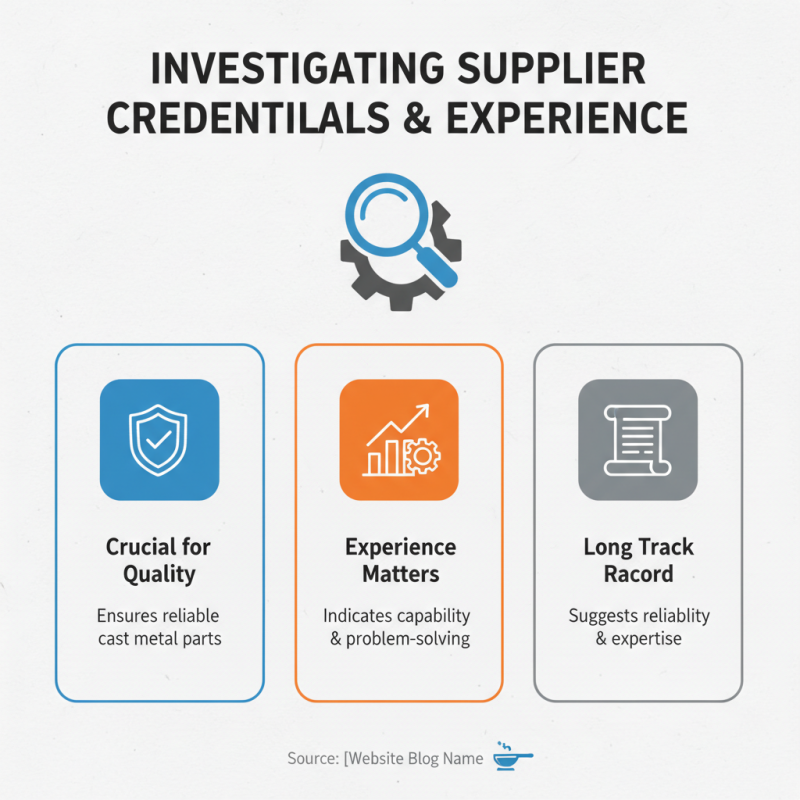
When selecting cast metal parts, investigating supplier credentials is crucial. A supplier’s experience often speaks volumes about their capability. Look for suppliers with specialized knowledge in your required metal type. Their history in the industry can indicate reliability and quality. A lengthy track record might suggest they have faced and overcome challenges.

Consider the certifications held by potential suppliers. These credentials can confirm adherence to industry standards. However, not all certifications guarantee quality. Sometimes, a newer supplier may offer innovative solutions. Explore reviews and independent feedback from previous customers. Personal testimonials can reveal both strengths and weaknesses in their service.

Questions can arise during this investigation. How transparent are they about their processes? Are they responsive to inquiries? A lack of communication may suggest future issues. Engaging in conversations can help clarify doubts. Focus on suppliers who demonstrate a genuine interest in your needs. This connection can lead to a more effective partnership.

Analyzing Cost vs. Quality Trade-offs in Cast Metal Components

When selecting cast metal components, the balance of cost and quality is crucial. Higher quality parts often come at a premium. This can lead to significant upfront costs, but may save money in the long run. Durable components reduce maintenance and replacement expenses.

Think about the specific demands of your project. Are you prioritizing longevity over initial expenditure?

Analyzing quality involves more than just price. Investigate the manufacturing processes and materials used. Inferior methods may lower costs but can lead to failures later. Consider the environment where the parts will be used. Harsh conditions may require more robust options, ultimately affecting choices.

A bargain might seem inviting, but what if the parts fail? The risk of downtime can lead to greater losses. Reflect on past experiences where cutting corners led to regrets.

Balancing these aspects will pave the way for informed decisions.