


 0086-15925850312




Casting Industry Trends and New Opportunities Revealed at Ningbo’s Premier Exhibition
2025-08-08
The 2025 Ningbo International Foundry Exhibition shows how the casting industry keeps growing worldwide.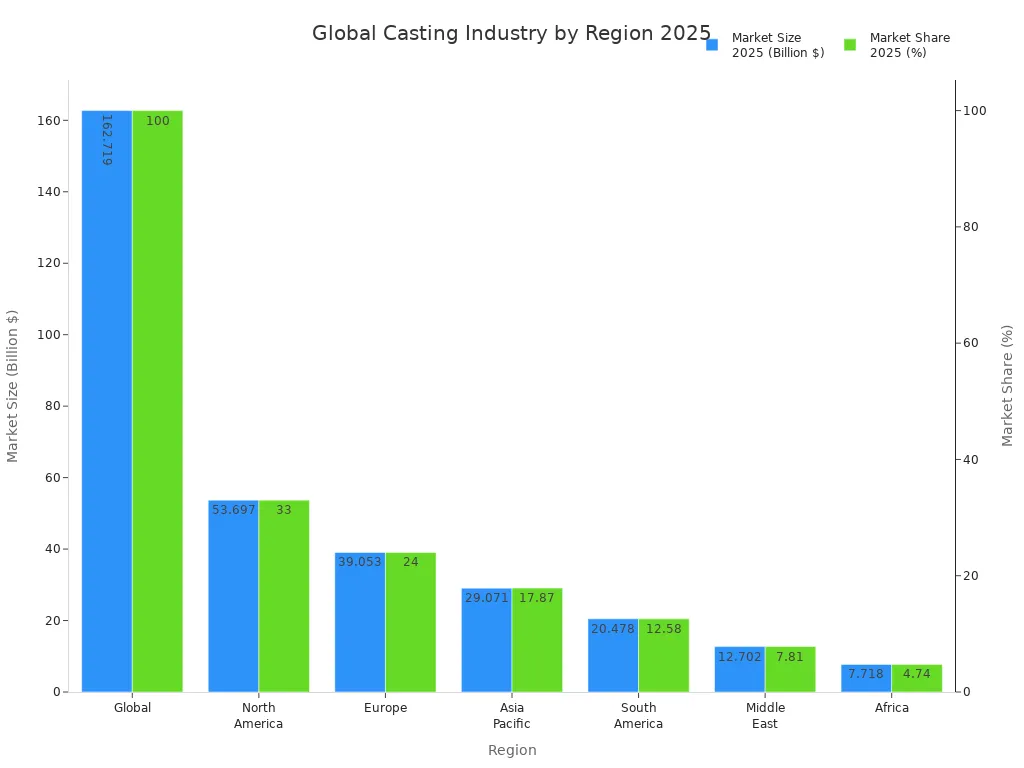
Ningbo’s industrial strength of Ningbo attracts innovators who seek to capture , especially as automation, new alloys, and EV demand transform the market. This EXHIBITION helps industry professionals connect with these changes right now.
Key Takeaways
- New technologies like 3D printing, AI, and smart sensors help casting companies make better, faster, and greener products.
- Growing markets in Asia-Pacific, North America, and other regions offer big chances for companies ready to adapt and collaborate.
- Attending events like the Ningbo Exhibition helps professionals learn, connect, and find new partners to grow their business.
Key Trends Shaping the Casting Industry
Technological Innovations in Casting
The casting industry is changing fast. New technologies help companies make better products and work more efficiently.
- 3D printing lets foundries create complex shapes that were impossible before. It also cuts down on time and costs because there is no need for traditional molds.
- High-performance alloysgive Cast Parts more strength and help them last longer, even in tough conditions likeaerospace or automotive work.
- Advanced ceramic shells make molds stronger and more stable, so there are fewer defects and higher quality parts.
Additive manufacturing and artificial intelligence also play big roles. AI can predict problems before they happen and improve quality control. These tools help foundries save money and deliver better products.
Sustainability and Green Manufacturing
Sustainability matters more than ever. Companies now use green sand casting and recycle materials to reduce waste. They also choose energy-efficient furnaces and reclaim sand for reuse.
Many foundries follow strict environmental rules and get eco-certifications to show their commitment.
Regulations and customer demand push companies to use cleaner methods. Firms that adopt green practices often see lower costs and a better reputation. New materials, like biodegradable binders, make casting even more eco-friendly.
Digital Transformation and Smart Foundries
Smart foundries use digital tools to boost productivity.
- Smart sensors track temperature and pressure in real time, cutting defect rates.
- IoT connects machines, which reduces downtime and increases output.
- Automation handles repetitive tasks, making workplaces safer.
These changes help foundries make quick decisions, fix problems before they grow, and stay competitive in a fast-moving market.
New Opportunities for Growth
Emerging Markets and Shifting Demand
The casting industry is seeing big changes in where demand comes from and even Latin America.. Companies now look beyond traditional markets and find new growth in places like Asia-Pacific, North America
- Asia-Pacific leads the way. Countries like China, India, and Japan drive this growth with booming car production, more factories, and higher incomes. People in these countries buy more cars and machines, which means they need more cast parts.
- North America is catching up fast. The market size there could double from USD 31.78 billion in 2024 to USD 62.2 billion by 2034. This jump comes from more car manufacturing, new factories, and better roads and bridges.
- Latin America and the Middle East & Africa show promise, too. These regions face some challenges, like not enough raw materials or skilled workers, but they still offer chances for companies willing to invest.
The Asia Pacific region stands out as the main driver for the next decade. Experts expect it to reach nearly USD 164.42 billion in revenue by 2033. India’s government spends billions on new roads and green energy, which boosts demand for cast parts in everything from cars to wind turbines.
Companies that spot these shifts early can grab and grow faster than their rivals.
Collaboration and Supply Chain Integration
Working together is now more important than ever. Casting companies and their partners see big benefits when they team up instead of working alone.
- When No. 1 Equipment Co. faced delays and quality problems with an overseas supplier, they turned to ABC Castings, a trusted local foundry.
- ABC Castings and No. 1 Equipment worked closely to fix design issues and improve how parts were made.
- They shared ideas at every level, even inviting each other to board meetings.
- ABC Castings upgraded their tools and added new machines, making better parts and offering extra services like machining and assembly.
- Both companies supported each other during tough times, always focusing on quality and delivery.
- This partnership helped No. 1 Equipment get reliable parts and let ABC Castings grow its business and reputation.
Global supply chains are also changing. Many companies now move production closer to home. They do this to avoid tariffs, protect their ideas, and cut hidden costs like shipping and storage. For example, Stanley Black & Decker brought tool production back to Texas, which kept costs steady and reduced risks from global events.
These changes open up for foundries that can offer fast, high-quality, and flexible service.
Talent Development and Skills Upgrading
People are the heart of any foundry. As technology changes, workers need new skills to keep up.
- AI and machine learning help match people to the right jobs and improve how foundries work.
- Real-time data and smart automation make casting faster and more accurate.
- Robotic Process Automation (RPA) takes care of boring tasks, so workers can focus on more important jobs.
- Workers now need to know how to use digital tools, analyze data, and solve problems quickly.
- Skills like on-camera acting, voiceover, and motion capture are growing in demand, especially as casting goes digital.
- Keeping digital profiles up to date and building a strong social media presence help workers get noticed for new roles.
Foundries that invest in training and new technology can attract top talent and stay ahead.
Continuous learning and embracing new tools are key to unlocking in today’s fast-changing world.
2025 Ningbo International Foundry Exhibition Highlights
Notable Exhibitors and Product Launches
Visitors at the Ningbo International Foundry Exhibition will see many top companies. These exhibitors bring new products and fresh ideas to the show floor. Some companies will launch advanced casting machines that use less energy. Others will show off new alloys that make parts stronger and lighter. Many booths will feature live demos, so people can watch the latest technology in action.
- Leading brands from the automotive and machinery sectors will display their newest solutions.
- Startups will introduce smart sensors and digital tools for foundries.
- Suppliers will present eco-friendly materials and green casting methods.
Everyone can find something exciting, whether they want to upgrade equipment or discover new trends.
Industry Forums and Knowledge Sharing
The exhibition hosts important forums where experts and business leaders meet. Events like the 6th China-Japan-ROK Intelligent Manufacturing Conference bring people together to share ideas and discuss industry changes. These sessions help companies learn about new trends and find real solutions to common problems.
Experts talk about digital tools, green manufacturing, and ways to work smarter.
People leave with new knowledge and ideas to help their businesses grow. These forums also help companies connect with others, share resources, and speed up their digital transformation.
Networking and Partnership Opportunities
The Ningbo exhibition creates many chances for companies to work together. Over the years, many successful partnerships have started here. The table below shows some examples:
| Partnership/Project | Description | Location/Region |
|---|---|---|
| Geely Auto & Grand Automotive | Exported electric vehicles to Europe, opening new markets | Hungary, CEE region |
| Zhenyu Technology | Built a European base for battery parts, using local skills | Hungary |
| Joyson Electronics (via Preh) | Runs 10 factories in six countries, boosting the auto supply chain | Romania, Hungary, Poland, etc. |
| Ningbo Bulgarhua Biomaterials Co., Ltd. | Started a biodegradable materials project in an industrial park | Yuyao, Ningbo |
| VR Park & Ningbo Science Exploration Center | Opened a VR Park store, attracting many visitors | Ningbo |
These stories show how the exhibition helps companies grow, enter new markets, and build strong partnerships.
Leveraging at Ningbo’s Exhibition
Actionable Steps for Industry Players
Industry professionals can take clear steps to make the most of casting at the Ningbo exhibition. First, they should walk the show floor with a plan. They can target booths that showcase smart foundry tools, eco-friendly materials, and digital casting solutions. By asking questions and watching live demos, they get a real feel for how these innovations work.
Next, they can join forums and workshops. These events offer a chance to hear from experts and learn about the latest trends. Many companies use these sessions to spot new business partners or find out how others solve common problems. Networking with other visitors often leads to fresh ideas and future deals.
Tip: Bring business cards and a notebook. Jot down contacts and ideas as you go. This helps turn inspiration into action after the event.
Finally, companies should review their own operations. They can look for ways to add new technology, improve sustainability, or train their teams. The exhibition gives them a roadmap for growth and helps them act fast on new opportunities.
Resources and Support Available
Many resources help casting companies seize . Here are some key supports:
- Advanced technologies like AI and data analytics help companies match talent and predict trends.
- Digital auditions and remote casting platforms open up bigger talent pools.
- Diversity and inclusion programs help companies find new voices and meet audience needs.
- Eco-friendly practices, such as digital scripts and green transportation, lower costs and boost reputation.
- Collaborative networks let companies share knowledge and resources.
- Legal and ethical support protects companies as they use new tech like AI.
Industry associations also play a big role. Groups like the North American Die Casting Association push for better training and public-private partnerships. They help schools teach the skills needed for modern casting jobs. Government programs, such as the U.S. Department of Defense’s support for student competitions, give young people hands-on experience with advanced casting. These efforts build a strong workforce and keep the industry moving forward.
The casting industry moves forward with smart technologies, green practices, and new materials. Companies find by joining events like the 2025 Ningbo International Foundry Exhibition. They connect, learn, and act fast. Those who stay curious and embrace change will lead the future of casting.
FAQ
What makes the Ningbo International Foundry Exhibition special?
Visitors see the latest casting technology, meet industry leaders, and find new business opportunities. The event brings together experts from around the world.
How can companies benefit from attending the exhibition?
Companies discover new products, learn about market trends, and connect with partners. Many find ideas to improve their business and grow faster.
Who should attend the Ningbo exhibition?
Anyone in the casting industry, including manufacturers, suppliers, engineers, and students, will find value. The event welcomes both experienced professionals and newcomers.